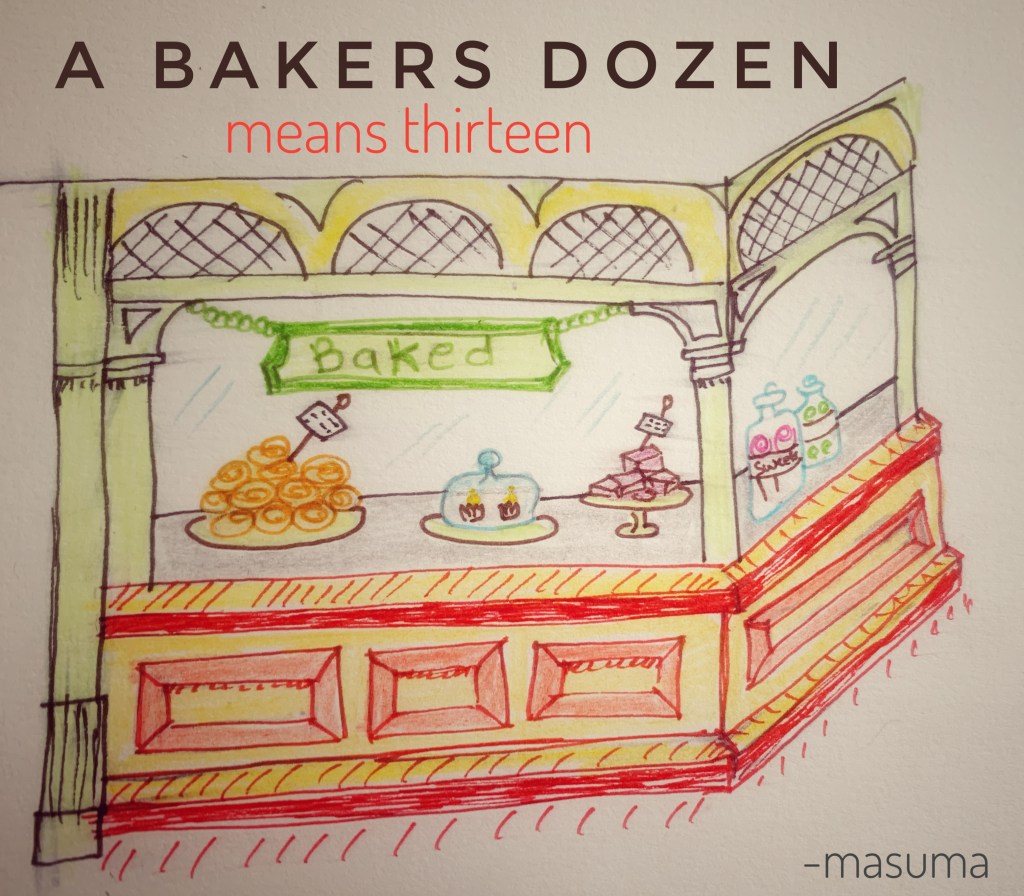
A baker’s dozen means thirteen. In the Middle Ages, baker’s suffered severe penalties if they sold loaves of bread which were below the legal weight. To avoid prosecution for any unintentional sale below this standard the bakers added an extra loaf free to every twelve, so ‘a baker’s dozen’ is really thirteen.
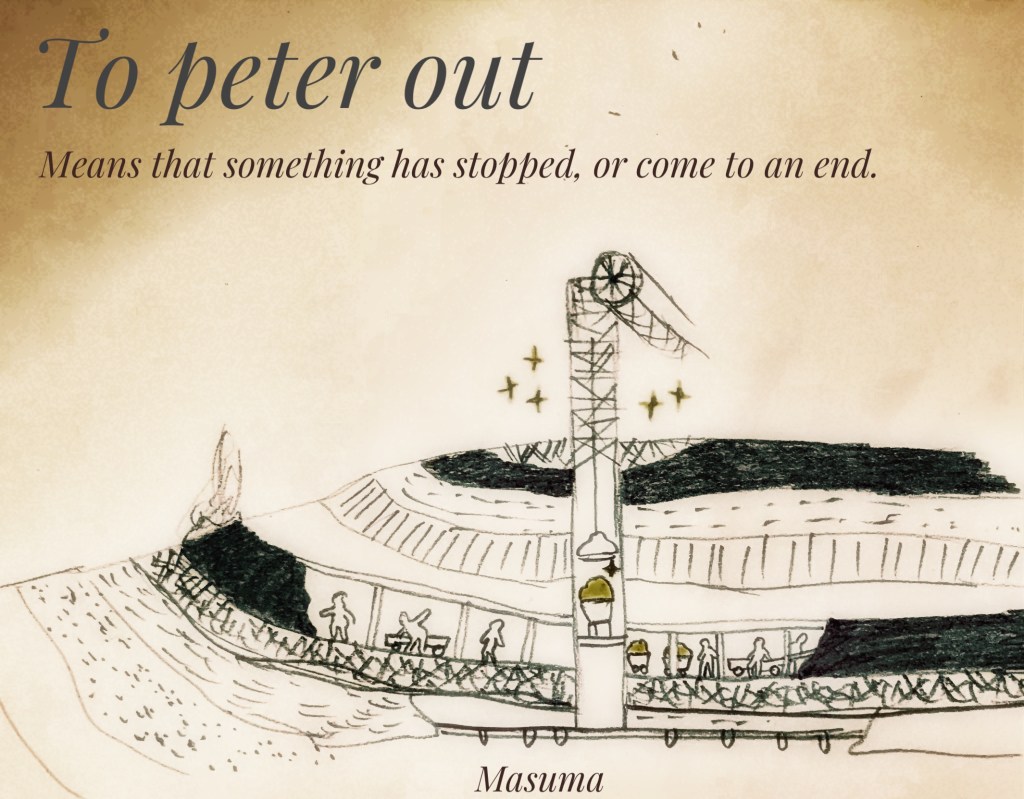
𝗧𝗼 𝗣𝗲𝘁𝗲𝗿 𝗼𝘂𝘁 when something peters out it has stopped, or come to an end.
The phrase arose in the American goldfields during the first half of the 19th century, when the two principal methods of mining gold were used.
‘Placer’ mining, which had been known since ancient times, was the easiest because nature had already done most of the work, eroding and leaching gold-bearing rocks into a fine powder, or into nuggets which could be separated from the alluvial deposits in prospector’s pans.
The another method was known as ‘lode’ mining, in which the gold had to be extracted from solid rock.
Peter is Greek for rock, and can also refer to a vein of ore. When a seam had been worked to exhaustion and revealed no more gold, it was said to have ‘petered out’.
Peter also obtains it’s name from the saltpetre of the explosive in the gunpowder used to extract and break up the gold-bearing rocks into a workable size.
P.S: authenticity is gold, lies only vibrate purity into dark doors.
𝒮𝓆𝓊𝒾𝓇𝓇𝑒𝓁 𝒶𝓌𝒶𝓎 means to put (something) in a safe or secret place especially so that it can be kept for future use
Squirrels bury good quality nuts either in one place or in scattered nodes. They can determine the quality of the nut by the weight, so they do know when it’s hollow, eaten from inside. Also they strategically remember the location stores due to their episodic memory and are able to discover 95% of their stash, those missed stores thankfully turns into a tree (yippee)! They are actively found collecting nuts during autumn to sort their winter hood demands.
And these nutty beings are so smart that if they become aware of any other presence lurking, they then deceive by digging a hole and burying a nut..well in reality they hide the nut in their mouth cheek to then later bury it elsewhere.
P.S: “find me in future” – is the note 📝 we leave in our stores..
𝒪𝓃𝓁𝓎 𝓉𝒽𝑒 𝒻𝒾𝓇𝓈𝓉 𝒸𝑜𝓊𝓇𝓈𝑒 means that something has only begun and that there is much more interesting, or important, to come. The saying is similar to the other popular one “That’s only for starters” which is also used today.
An early example of the use of this phrase might be the entertainment laid on by Cleopatra for her favourite Mark Antony, which she declared would cost a fortune. Everything appeared to be costly and magnificent at their feast, yet there was nothing which could cost that much. As Mark Antony began to joke and point this out, Cleopatra commanded him to be patient: “What you see”, she said, “is only the first course”.
As she gave a signal, two richly dressed boys brought her a magnificent vase studded with diamonds, which contained a strong vinegar. Cleopatra immediately took off one of her magnificent Pearl earrings and threw it into the vase, and watched with delight at the apparent gradual melting of the precious jewel. After which, gracefully drinking the health of Mark Antony, she swallowed the costly draught. The value of each earrings was recorded as being worth the equivalent of £52000 each.
P.S: is there anything more to see? Oh well to begin with where is the first course yet.
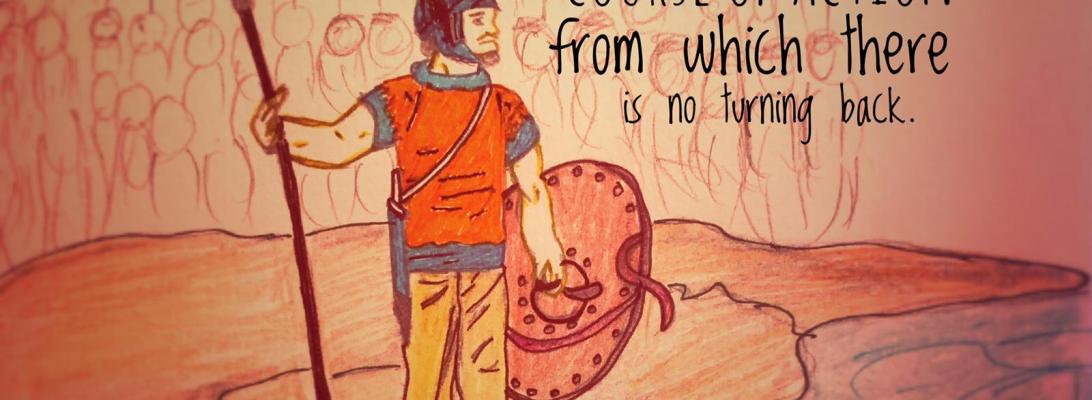
𝗧𝗼 𝗰𝗿𝗼𝘀𝘀 𝘁𝗵𝗲 𝗥𝘂𝗯𝗶𝗰𝗼𝗻 means to make a decision, or take a course of action, or decisive step, which once embarked upon cannot be altered, and from which there can be no turning back or opportunity to change one’s mind. The phrase arose from the action of Julius Caesar, in 49 BC, when he was ordered to disband his army. Instead of doing so he led his dedicate legion across the shallow river Rubicon, which bounded his Gallic province in northern Italy, and marched against Rome, exclaming ‘the die is cast’. This brought about what amounted to a declaration of war against the Senate.
Fortunately for Caesar, his decision was successful and he became master of the Roman world.
P.S: To learn all politics through the Romans has evolved me into accepting of all the manipulation in this world and understand people/power better.
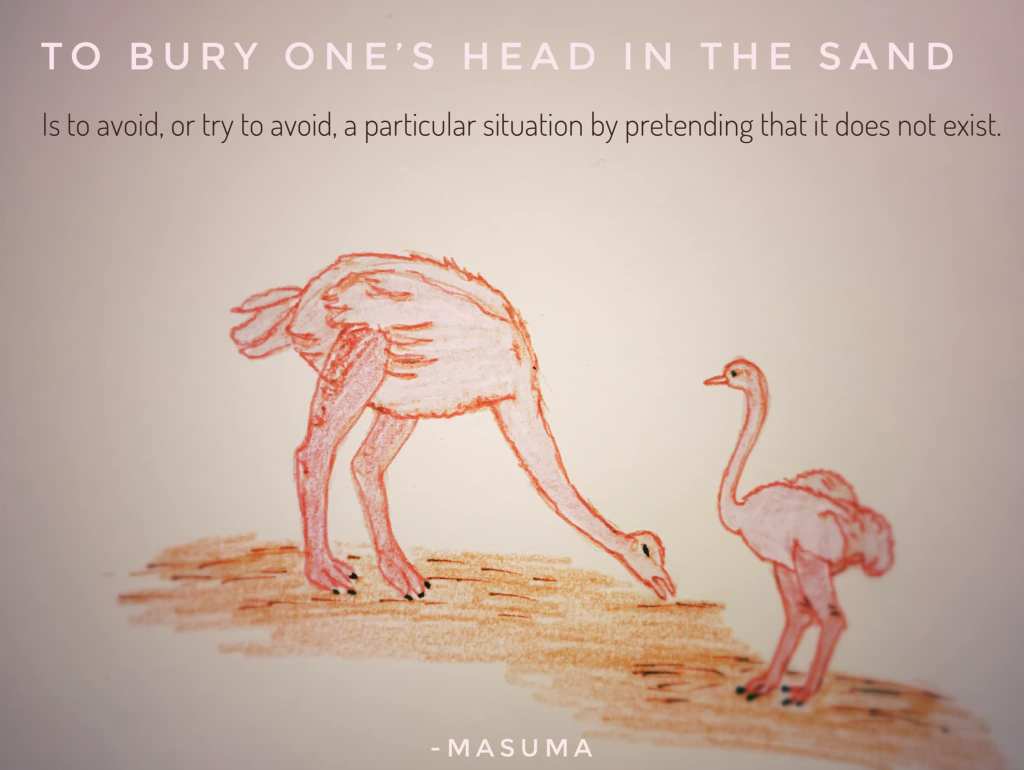
ᴛᴏ ʙᴜʀʏ ᴏɴᴇ’ꜱ ʜᴇᴀᴅ ɪɴ ᴛʜᴇ ꜱᴀɴᴅ is to refuse to take any notice of a difficulty or problem; to pretend that it does not exist, or think it will go away, or solve itself. The expression is based on the habit of the ostrich which is reputed to bury its head in sand when pursued and in danger, in belief that it cannot be seen.
The ostrich, which is the largest flightless bird of Africa, up to 9ft in height, does not, in fact, do any such thing.
Despite their size, and their weight of around 136kg, ostriches are extremely agile. When they sense the approach of predators they bend their necks parallel to the ground to listen intently and if in danger, they are able to escape running away at speeds of up to 40 mph.
They probably give the impression that they bury their heads when they are seen bending their necks, and listening close to the ground, or when attending the eggs in their nests, which consists of a simple depression scraped in the sand.
P.S – so concerned, though being buried is a better choice at times..
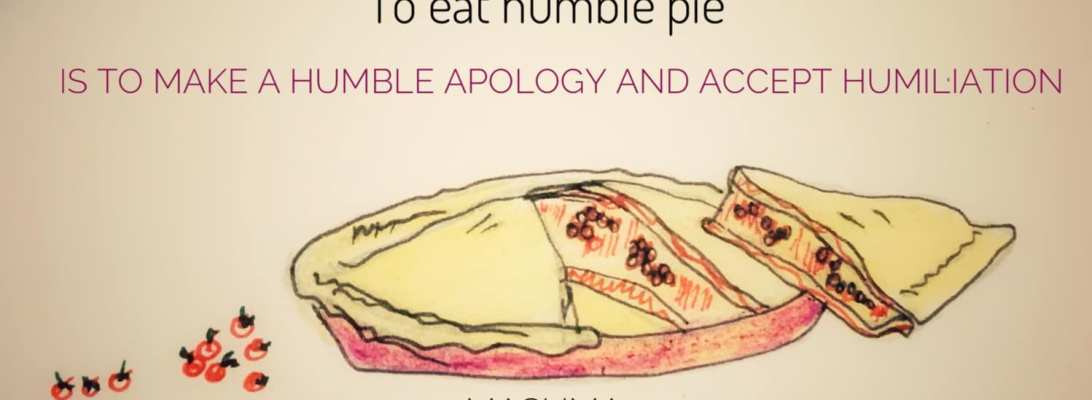
ᴛᴏ ᴇᴀᴛ ʜᴜᴍʙʟᴇ ᴘɪᴇ means to be prepared to suffer humiliation by admitting that one is wrong, whether one believes this to be so or not, and to apologise for what one has done or said.
The expression probably arose from medieval dining customs. The choicest meat was served to the master of the household, his family and guests and the less desirable were given to the staff, baked in the form of pies









 Swabhaw - where you Feel WORDS