Told sub rosa

Told sub rosa (under the rose) Anything told sub rosa (under the rose) is spoken in strictest confidence and must not be repeated.
The rose in question is the white rose which has for long been the emblem of silence.

Whenever a white rose was hung above the banqueting table, no matter what was said or whatever the company, no secrets revealed were ever to be repeated. The custom originated with the Romans and spread to England, where it was widely used during the days of chivalry. It persisted until Victorian times when the living rose was replaced by a plaster motif carved in the ceilings of dining-rooms, many of which can still be seen today.
Salad days

Shakespeare mentions these in Antony & Cleopatra (Act 1, Scene 5)

β€œπ”π”Ά π”°π”žπ”©π”žπ”‘ π”‘π”žπ”Άπ”°, 𝔴π”₯𝔒𝔫 β„‘ π”΄π”žπ”° 𝔀𝔯𝔒𝔒𝔫 𝔦𝔫 𝔧𝔲𝔑𝔀𝔒π”ͺ𝔒𝔫𝔱”.

The reference is to the years of inexperienced youth – green is the fresh colour of young vegetables used in salads, and represents anyone who is young and lacking in experience. This also accounts for the use of the terms β€˜green’ and β€˜greenhorn’ for anyone considered to be a novice, raw hand, or simpleton.

P.S: and salad is delicious πŸ˜‹ with the right dressing of courseπŸ’š.

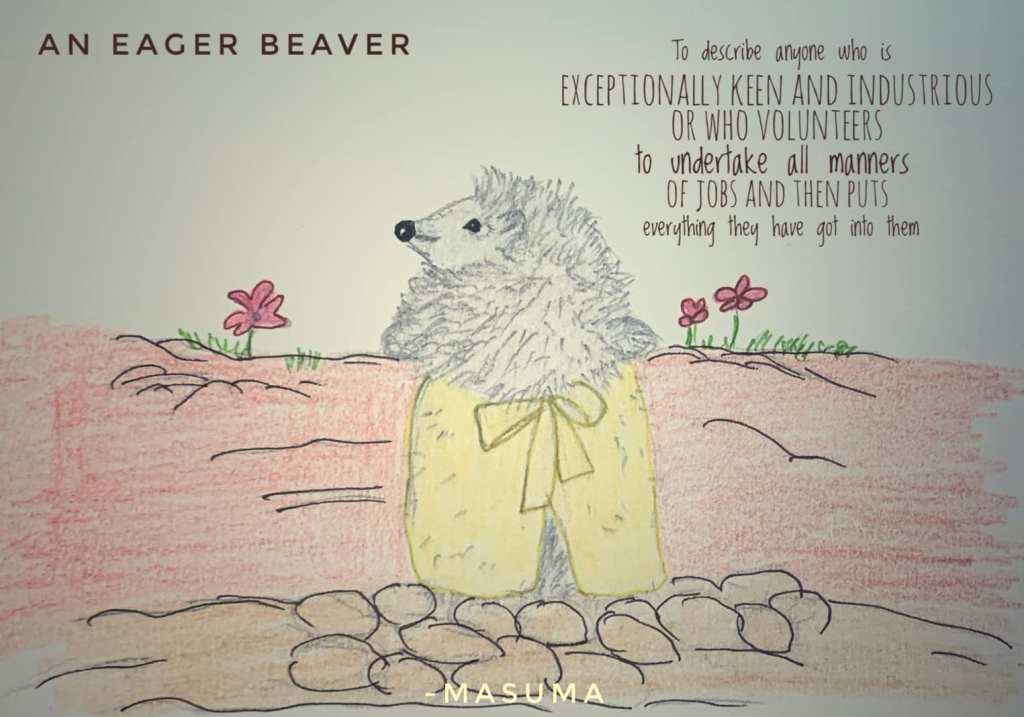
An Eager Beaver

An Eager Beaver is to describe anyone who is exceptionally keen and industrious or who volunteers to undertake all manners of jobs and then puts everything they have got into them.

Beavers are among the most intelligent and hardworking of animals as well as being remarkable β€˜engineers’, able to build dams, houses, canals and cut down trees. Besides rearing their own three or four at a time, they also take over the raising of orphaned beavers. The word β€˜eager’ is derived through the French aigre from the Latin acer , meaning sharp, keen.

P.S: mud, stones and wood, let’s build!

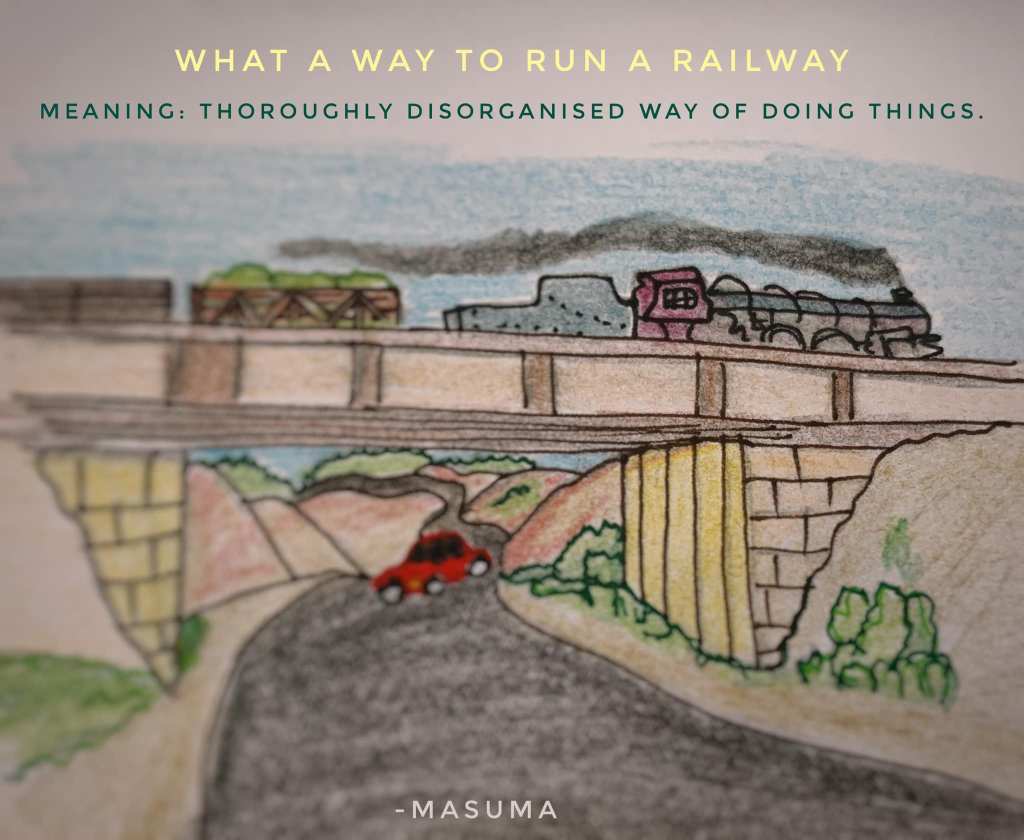
What a way to run a railway

π–œπ–π–†π–™ 𝖆 π–œπ–†π–ž 𝖙𝖔 π–—π–šπ–“ 𝖆 π–—π–†π–Žπ–‘π–œπ–†π–ž – This phrase became widely popular as the result of a cartoon which appeared in the American magazine Ballyhoo in 1932,
portraying a signalman looking out of his signal-box at two trains careering along the same line towards each other.
As he watches them about to collide head on he says, “Tch-Tch – what a way to run a railway!”